
When choosing a double stroller seat layout, focus on proper weight distribution to guarantee safety and easy maneuvering. If your children differ markedly in size, placing the heavier child in front or side-by-side can improve stability. Consider your routine spaces—narrow aisles favor tandem models, while wider areas suit side-by-side strollers. Balancing comfort, safety, and long-term durability is key. Keep in mind, understanding how weight impacts handling will help you make the best decision, and more tips await you below.
Key Takeaways
- Assess your children’s current weights and anticipate future growth for balanced load distribution.
- Choose side-by-side strollers for equal weight distribution and comfort, especially if children are similar in size.
- Opt for tandem strollers if maneuverability in narrow spaces is a priority, but ensure weight balance between seats.
- Consider the impact of heavier children in the front seat to improve stability and reduce tipping risks.
- Regularly evaluate and adjust seat positions to maintain proper weight distribution and extend stroller longevity.
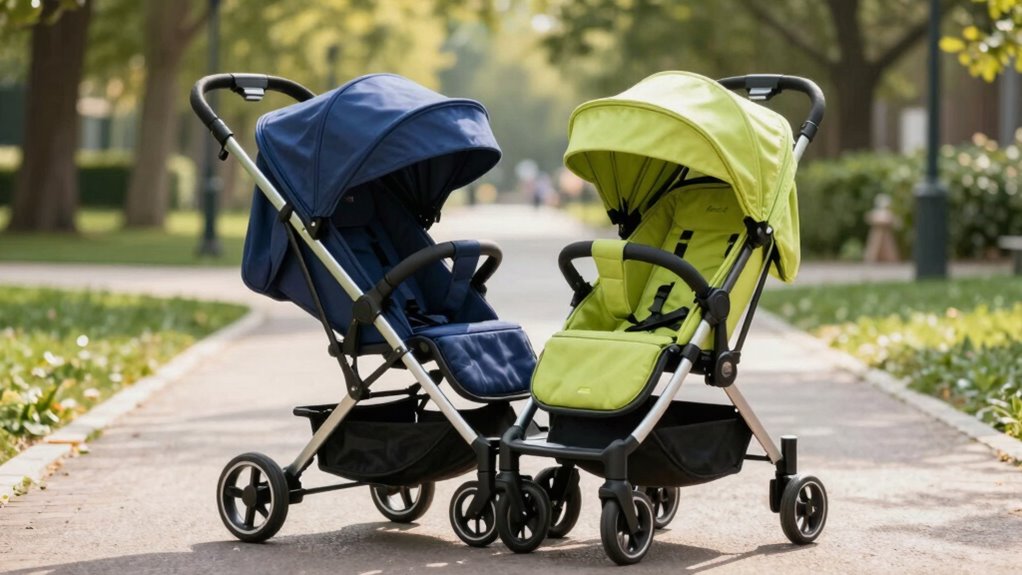
Getting the right double stroller isn’t just about choosing a popular brand; it’s about understanding the math behind size, weight limits, and features. One of the most critical factors is how the stroller handles stroller weight distribution. Proper weight distribution ensures stability and safety, especially when you have two kids of different sizes or weights. For example, if the heavier child sits in the front seat, the stroller maintains better balance, reducing the risk of tipping forward. Conversely, placing the lighter child in the front can sometimes make steering easier, but it may put more strain on the stroller’s frame if the weight isn’t balanced properly. When evaluating seat configuration pros and cons, think about how the weight of your children will be distributed and how that affects maneuverability and safety.
Proper weight distribution in a double stroller enhances safety, stability, and maneuverability for both children.
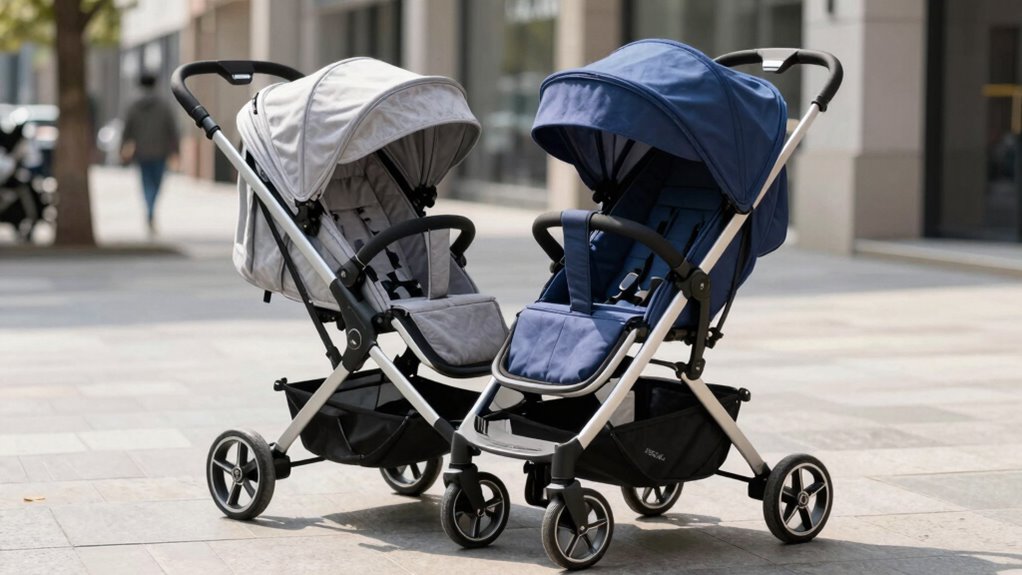
The seat configuration options typically fall into two categories: side-by-side and tandem. Side-by-side strollers offer equal weight distribution because both seats are positioned horizontally. This layout makes it easier to supervise both kids equally and provides more space for each child’s comfort. However, side-by-side models tend to be wider, which can make orchestrating narrow store aisles or crowded sidewalks more challenging. Tandem strollers, with seats arranged front to back, often have a narrower profile, making them more maneuverable in tight spaces. But, the weight distribution can become uneven if one child is substantially heavier than the other, potentially affecting the stroller’s stability and ease of pushing.
Considering the pros and cons of each seat configuration, you should evaluate your daily routines. If you frequently steer crowded areas, a tandem might be more practical due to its narrower width. If your children are close in size and you value equal comfort, a side-by-side stroller might be better despite its width. Remember, the way weight is distributed impacts not just maneuverability but also the stroller’s durability over time. Overloading one side or seat can cause uneven wear on wheels and hinges, so think about how you’ll load your children and which layout supports that best. Additionally, understanding the importance of weight limits and how they influence stroller longevity is essential for making a safe choice.
Ultimately, understanding stroller weight distribution and the pros and cons of seat configurations helps you make smarter choices. It’s not just about matching your kids’ current sizes but also about anticipating how they’ll grow and how the stroller will handle that change. By considering these factors, you guarantee your stroller remains safe, functional, and comfortable for both your children and you.
Frequently Asked Questions
Are Side-By-Side Strollers More Stable Than Tandem Models?
Side-by-side strollers tend to be more stable than tandem models because their wide base lowers the center of gravity, reducing tipping risks. This stability comparison makes them safer for active toddlers who might lean or shift. However, safety considerations also include maneuverability and terrain, so choose a design that suits your daily needs. Ultimately, a well-built double stroller with a low center of gravity offers the best safety and stability for your children.
How Does Seat Configuration Affect Stroller Weight and Portability?
Your seat configuration substantially impacts stroller weight and portability. A side-by-side layout distributes weight evenly, making it easier to maneuver, but adds bulk, increasing portability challenges. Tandem strollers are often narrower, easing storage and transport, but may feel less stable. Consider how weight distribution aligns with your storage space and travel needs, balancing stability with portability to find the best seat layout for your lifestyle.
Can the Seat Layout Impact Stroller Maneuverability in Tight Spaces?
Yes, your seat layout can impact maneuverability in tight spaces. If you opt for a side-by-side setup, you might find it harder to navigate narrow passages because of its wider turning radius. However, a tandem layout typically offers a smaller turning radius, making it easier to maneuver through tight spots. So, choosing a seat configuration thoughtfully can make daily outings smoother, especially in crowded or confined areas.
Do Different Seat Arrangements Influence Stroller Storage Options?
Yes, the seat arrangements affect your stroller’s storage capacity and seat accessibility. Facing seats forward may limit storage space underneath, while tandem setups often maximize storage options. Additionally, accessible seat layouts make it easier to reach your children and store essentials. When choosing a layout, consider how much storage you need and how easily you can access the seats, ensuring both convenience and practicality during errands or outings.
Is There a Preferred Seat Layout for Different Age Gaps Between Children?
If your children have a small age gap, a side-by-side seat arrangement offers better age gap compatibility, allowing both to interact easily. For larger gaps, a tandem layout might suit your needs, giving older kids more independence while still keeping the younger close. Your seat arrangement preferences depend on your children’s ages and your daily routine, but always prioritize comfort, accessibility, and ease of maneuvering when choosing the best layout.
Conclusion
So, after all that math, you’d think choosing the right seat layout would be a breeze, right? Nope, it’s just another puzzle to solve while juggling diaper bags and snack requests. But hey, isn’t it funny how something as simple as a stroller can turn into a strategic game? Just pick what works for your family, and remember—no matter the layout, you’re doing an amazing job. Math, stroller style, and all.