
The best webcam for streaming overall is the EMEET S600, which pairs 4K capture with a Sony sensor and PDAF autofocus. For flexible framing, the EMEET C60E adds wide-angle and telephoto cameras, while the Logitech C920S is a straightforward 1080p pick for streamers who value simplicity. The main tradeoffs are resolution versus smooth, dependable everyday use, built-in audio versus a separate microphone, and extra framing features versus ease of setup. A higher-resolution camera cannot compensate for poor lighting or an awkward camera angle. Read on for the full breakdown of all 14 options and guidance on matching a webcam to your streaming setup.

Turn the school run and nap time into listening time
- Thousands of audiobooks, podcasts and originals
- Listen on your phone, tablet or Echo — also offline
- Cancel anytime
Complete the kit


Key Takeaways
- The EMEET S600 leads for most streamers because its 4K sensor and PDAF autofocus target image detail and reliable focus without the more specialized dual-camera approach of the EMEET C60E.
- The EMEET C60E and PIXY stand apart on framing. Their dual-camera designs suit creators who need more than a fixed, straightforward webcam view, though the added flexibility may be unnecessary for a single-seat desk setup.
- 4K is not an automatic win for streaming. Logitech’s C920S and C920x offer a simpler 1080p path, which may fit a standard face-camera stream better than extra resolution that the broadcast platform or setup cannot use.
- Built-in microphones are a convenience, not a substitute for a dedicated mic. Several models advertise dual or noise-canceling microphones, but streamers who prioritize clear voice audio should weigh microphone placement and room noise before choosing a camera.
- Simple Full HD models remain useful for beginners. The Logitech Brio 101, EMEET C960, and basic 1080p options emphasize accessible setups, while light-equipped and 4K models make more sense when their specific features solve a real problem.






| webcam for streaming | Connectivity | Focus | Viewing angle | Sensor |
|---|---|---|---|---|
| Logitech Brio Ultra 4K HD Webc | USB-A and USB-C | Autofocus | — | CMOS |
| Logitech C920S HD Pro Webcam F | USB; USB 2.0 compatible | Autofocus | 78 degrees | CMOS |
| EMEET PIXY Dual-Camera AI-Powe | USB 2.0 and Type-C | PDAF and AI autofocus | 73 degrees | Sony 1/2.55-inch sensor |
| EMEET C960 1080p Webcam with D | USB Type-A with A-to-C adapter | Fixed focus | 90 degrees | CMOS |
| 1080P HD Webcam with Microphon | USB | Fixed focus | — | CMOS |
| Acer A640 4K Webcam with AI No | USB | Autofocus with PDAF | — | CMOS, 1/2.8-inch |
| EMEET S600 4K Webcam with Sony | USB | PDAF autofocus | 73 degrees | Sony CMOS, 1/2.55-inch |
| Logitech C920x HD Pro Webcam F | USB | Autofocus | 78 degrees | CMOS |
| Logitech Brio 101 Full HD 1080 | USB-A | Fixed focus | 60 degrees | — |
| TRausi 1080p FHD Webcam with N | USB | Fixed focus | — | — |
| AOC 4K Webcam for PC | USB-C and USB-A | Autofocus | — | — |
| EMEET C60E Dual-Camera 4K Webc | USB 2.0 | PDAF autofocus | 73° | — |
| MELCAM 2K Webcam with Light fo | USB | Autofocus | 81.6° | — |
| EMEET NOVA 4K Webcam for PC | USB | PDAF autofocus | 73° | — |
More Details on Our Top Picks
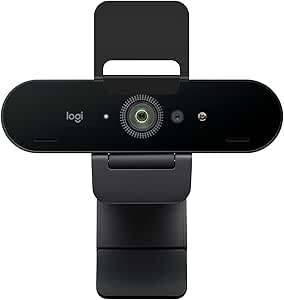
Logitech Brio Ultra 4K HD Webcam for Streaming and Meetings – Black
The Logitech Brio is the strongest fit here for streamers who want 4K capture and flexible framing without moving to a tracking camera. Its HDR and automatic lighting adjustment can help keep a face readable when room light changes, while the adjustable field of view gives more control over how much of the setup appears on screen. Compared with the Logitech C920S, it offers higher resolution and more framing options, but the C920S is a simpler 1080p choice if your audience and workflow do not benefit from 4K. The Brio also includes dual noise-canceling microphones, though dedicated streaming audio will usually be a stronger upgrade than relying on webcam mics. Its higher cost, Windows-focused full feature support, and USB connection needs make it a specialist pick rather than the default for every streamer.
Pros:- 4K UHD capture provides more detail than the 1080p Logitech C920S.
- HDR and automatic lighting adjustment help handle uneven room lighting.
- Adjustable field of view makes it easier to frame a face or a wider streaming setup.
- Dual noise-canceling microphones and Windows Hello support add utility beyond streaming.
Cons:- Costs more than a basic 1080p webcam without guaranteeing a visible benefit on every streaming platform.
- Full feature support is limited to Windows.
- USB-A or USB-C connectivity may require an adapter for some devices.
Best for: Streamers who want 4K video, adjustable framing, and automatic image handling for a detailed on-camera setup.
Not ideal for: Beginners streaming at 1080p or buyers who need broad non-Windows feature support and do not need 4K.
- Resolution:Maximum UHD
- Sensor:CMOS
- Connectivity:USB-A and USB-C
- Focus:Autofocus
- Image features:HDR and automatic lighting adjustment
- Microphones:Dual noise-canceling microphones
- Form factor:Compact; 2.22 oz
- Color:Black
Our verdict“Choose the Brio if 4K detail and adjustable framing matter more to your stream than price or broad platform flexibility.”
Logitech C920S HD Pro Webcam Full 1080p/30fps Video Calling Clear Stereo
The Logitech C920S suits streamers who want dependable 1080p video and straightforward setup rather than 4K capture or automated camera movement. It records at 1080p and 30 fps, with autofocus and light correction to help keep a seated presenter clear across ordinary room conditions. Its privacy shutter is a practical distinction from the Logitech Brio, while the Brio pulls ahead for resolution, HDR, and adjustable framing. The C920S also has stereo microphones, but streamers prioritizing polished sound may prefer a separate mic instead of depending on either webcam’s built-in audio. This is a USB 2.0 model, so it lacks newer connection flexibility, and its fixed 78-degree viewing angle gives less control over composition than the Brio’s adjustable field of view. It makes sense for a conventional desk setup, not a moving or highly produced stream.
Pros:- 1080p at 30 fps suits standard live streams and recordings.
- Autofocus and light correction help maintain a clear face shot.
- Integrated privacy shutter covers the lens when the camera is not in use.
- Stereo microphones provide built-in audio for basic streaming setups.
Cons:- The 78-degree viewing angle is not adjustable, unlike the Logitech Brio’s field of view.
- USB 2.0 connectivity is less flexible than a newer connection setup.
- Built-in microphones may not meet the audio expectations of more polished streams.
Best for: Desk-based streamers who want autofocus, light correction, and a physical privacy shutter in a familiar 1080p setup.
Not ideal for: Creators who need 4K output, adjustable framing, or a camera that follows movement around the room.
- Resolution and frame rate:1080p at 30 fps
- Sensor:CMOS
- Connectivity:USB; USB 2.0 compatible
- Focus:Autofocus
- Viewing angle:78 degrees
- Lens:Glass
- Microphones:Dual stereo microphones
- Privacy:Built-in privacy shutter
Our verdict“Pick the C920S for a familiar, privacy-conscious 1080p desk setup, but choose the Brio if you need 4K or more framing control.”
EMEET PIXY Dual-Camera AI-Powered PTZ 4K Webcam
The EMEET PIXY is the lineup’s movement-oriented choice: its AI tracking and motorized pan-and-tilt are aimed at streamers who stand, gesture, or teach while on camera. Compared with the fixed-position Logitech C920S, it can follow activity across a space instead of leaving the presenter to stay centered. The dual-camera system, PDAF and AI autofocus, gesture control, and triple-mic array create a more feature-rich setup than a basic plug-in webcam. That flexibility comes with added complexity: its listed maximum display resolution is FHD, so the 4K wording in the product name should not be read as a promise of 4K output in the supplied specifications. It also lacks Windows Hello support and may pose compatibility issues with Chrome OS. Choose it for tracking and movement, not for the simplest fixed desk stream.
Pros:- AI tracking and PTZ movement can keep a moving presenter in frame.
- PDAF and AI autofocus support responsive subject focus.
- Triple-microphone array provides built-in audio capture.
- Gesture control and EMEET STUDIO software add hands-free camera controls.
Cons:- The supplied specs list maximum FHD display resolution despite the 4K product name.
- Chrome OS compatibility may be limited, and Windows Hello is not supported.
- Tracking features add setup and control complexity compared with fixed webcams such as the Logitech C920S.
Best for: Online teachers, presenters, and streamers who move around their frame and want automated camera tracking.
Not ideal for: Creators seeking a simple fixed webcam, guaranteed Chrome OS compatibility, or clearly specified 4K output.
- Listed maximum resolution:FHD
- Sensor:Sony 1/2.55-inch sensor
- Connectivity:USB 2.0 and Type-C
- Focus:PDAF and AI autofocus
- Movement:310-degree pan and 180-degree tilt
- Viewing angle:73 degrees
- Microphones:Triple-microphone array
- Compatibility:Windows 10+ and macOS 10.14+
Our verdict“Choose the PIXY if your stream involves movement and automated framing; skip it if you want a straightforward fixed camera or need confirmed 4K output.”
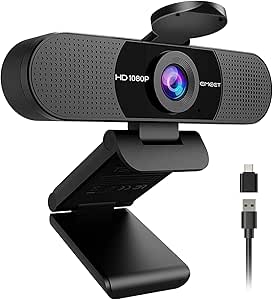
EMEET C960 1080p Webcam with Dual Omnidirectional Microphones and 90° Wide-Angle Lens
The EMEET C960 is a practical fit for streams that need to show more than one person or a broader desk scene. Its 90-degree wide-angle lens gives a wider view than the Logitech C920S’s 78-degree angle, making group framing easier without moving the camera farther away. Automatic light correction, dual omnidirectional microphones, and a built-in privacy cover keep the feature set focused on everyday convenience. The tradeoff is its fixed-focus lens: unlike the autofocus C920S, it offers less flexibility when the subject changes distance, so it suits a mostly stationary setup. It also lacks the Brio’s 4K detail and adjustable field of view. USB-A connectivity with an included A-to-C adapter supports a range of devices, but compatibility with some tablets and TVs is limited.
Pros:- 90-degree field of view captures more of a room than the Logitech C920S’s 78-degree angle.
- Automatic light correction supports clearer video in changing indoor light.
- Dual omnidirectional microphones provide built-in audio capture.
- Integrated privacy cover and A-to-C adapter add day-to-day convenience.
Cons:- Fixed focus is less adaptable than the Logitech C920S’s autofocus.
- The wide view is not adjustable and may include more background than a single-person stream needs.
- Compatibility is limited with some tablets and TVs.
Best for: Streamers who need a wider fixed shot for two people, a shared desk, or a small teaching setup.
Not ideal for: Creators who move close to and away from the camera, need autofocus, or want 4K detail and adjustable framing.
- Resolution:1080p
- Sensor:CMOS
- Connectivity:USB Type-A with A-to-C adapter
- Focus:Fixed focus
- Viewing angle:90 degrees
- Microphones:Dual omnidirectional microphones
- Image feature:Automatic light correction
- Privacy:Built-in privacy cover
Our verdict“Choose the C960 for a stationary, wider 1080p shot, but favor the C920S if autofocus matters more than extra scene width.”
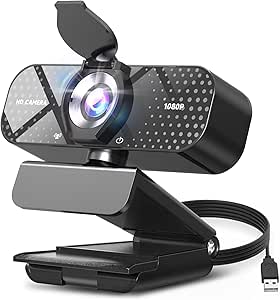
1080P HD Webcam with Microphone, Noise Cancellation, Auto Light Correction, Plug & Play USB Webcam for Laptop, Desktop, PC (Black-Gray)
This 1080p USB webcam is the no-frills option for a streamer who needs a basic camera and wants to avoid a feature-heavy setup. It combines 1920-pixel effective video resolution, a fixed-focus wide-angle lens, a built-in noise-canceling microphone, and automatic light correction. Compared with the EMEET C960, it offers a similarly straightforward USB approach but does not specify a 90-degree field of view or a privacy cover, so those shopping for wider framing or a physical lens block should look to the C960. The fixed focus is best for a seated creator who stays at a consistent distance; it is less suited to frequent movement or close-up changes than the autofocus Logitech C920S. The short 90-day warranty also gives less reassurance for a camera intended to stay in a regular streaming setup.
Pros:- 1080p video is suitable for standard streaming workflows.
- Built-in microphone includes noise cancellation.
- Automatic light correction can help with uneven indoor lighting.
- USB plug-and-play design supports a simple setup across listed device types.
Cons:- Fixed focus is less flexible than the autofocus Logitech C920S when subject distance changes.
- The product data does not specify a viewing angle or a privacy cover.
- The 90-day warranty is relatively short for a regularly used streaming camera.
Best for: First-time streamers who want a simple USB 1080p camera for a stationary laptop or desktop setup.
Not ideal for: Creators who need autofocus, a specified wide viewing angle, a privacy cover, or longer warranty coverage.
- Resolution:1080p; 1920 effective pixels
- Sensor:CMOS
- Connectivity:USB
- Focus:Fixed focus
- Lens:Wide angle
- Microphone:Built-in microphone with noise cancellation
- Image feature:Automatic light correction
- Warranty:90 days
Our verdict“Pick this model for a basic stationary 1080p stream, but choose the EMEET C960 for a stated wide angle and built-in privacy cover.”
Acer A640 4K Webcam with AI Noise Canceling Microphone for Streaming and Meetings
The Acer A640 pairs 4K video with a Sony 1/2.8-inch sensor, PDAF autofocus, and an AI noise-canceling microphone, making it a sensible pick for streamers who want sharp detail without adding a separate mic right away. Its autofocus can help keep your face clear if you shift position, while automatic low-light correction may help in less-than-perfect rooms. Compared with the EMEET S600, the A640’s listed strengths lean toward audio processing rather than a 60fps Full HD option or adjustable framing. It also includes a privacy shutter and plug-and-play USB setup. The tradeoffs are that the product data gives little detail about software controls, and the description says good lighting is still needed for its best image. Skip it if you need built-in speakers or depend on advanced camera customization.
Pros:- 4K resolution and a 1/2.8-inch Sony sensor support detailed on-camera presentation.
- PDAF autofocus can keep the image sharp as the streamer moves.
- AI noise cancellation offers a convenient starting point for cleaner voice audio.
- USB plug-and-play setup and a privacy shutter suit regular streaming use.
Cons:- Good lighting is still needed for the best image quality.
- Software features and customization options are not clearly detailed.
- No built-in speakers.
Best for: Streamers who want 4K detail, autofocus, and a noise-canceling mic in a straightforward USB webcam.
Not ideal for: Creators who need 1080p at 60fps, detailed software controls, or a camera that performs at its best in very dim rooms.
- Video resolution:4K
- Sensor:CMOS, 1/2.8-inch
- Focus:Autofocus with PDAF
- Connectivity:USB
- Audio feature:AI noise-canceling microphone
- Exposure:Automatic
- Color:Grey
- Weight:4.64 ounces
Our verdict“Choose the Acer A640 if you want 4K video with autofocus and onboard noise cancellation, but skip it if frame-rate flexibility or detailed software controls matter more.”
EMEET S600 4K Webcam with Sony 1/2.55″ Sensor and PDAF Autofocus
The EMEET S600 is the most flexible choice here for streamers who alternate between crisp detail and fluid motion: it records 4K at 30fps or 1080p at 60fps. That Full HD mode is a practical advantage for fast gestures, gameplay commentary, or a more fluid on-camera look, while PDAF autofocus helps keep the subject sharp. Compared with the Acer A640, the S600 adds a stated 60fps option and dual noise-canceling mics, though the Acer also emphasizes AI noise cancellation and a larger listed sensor format. The S600 includes a privacy cover and optional EMEETLINK software, but its 4K field of view is fixed, which can make tight desk setups harder to frame. Chrome OS support is limited, so check compatibility before choosing it for that system.
Pros:- Offers both 4K at 30fps and 1080p at 60fps for different streaming styles.
- PDAF autofocus supports sharp subject tracking.
- Dual noise-canceling microphones and a built-in privacy cover are included.
- Optional EMEETLINK software adds customization beyond basic plug-and-play use.
Cons:- Chrome OS compatibility is limited.
- The 4K field of view is fixed and may not fit every desk setup.
- No water resistance or internal storage.
Best for: Streamers who want to switch between 4K detail and smoother 1080p motion, especially on Windows or macOS.
Not ideal for: Chrome OS users and creators who need adjustable framing at 4K or a narrow view in a compact streaming space.
- Maximum resolution:4K (3840 × 2160)
- Frame rates:4K at 30fps; 1080p at 60fps
- Sensor:Sony CMOS, 1/2.55-inch
- Focus:PDAF autofocus
- Viewing angle:73 degrees
- Audio:Dual noise-canceling microphones
- Connectivity:USB
- Dimensions:2.95 × 2.8 × 2.05 inches
Our verdict“Pick the EMEET S600 if you value 1080p at 60fps alongside 4K, but look elsewhere if you need flexible 4K framing or Chrome OS support.”
Logitech C920x HD Pro Webcam Full 1080p/30fps with Autofocus and Light Correction
The Logitech C920x is a straightforward 1080p at 30fps webcam for streamers who value autofocus and automatic light correction over 4K capture or high frame rates. Its glass lens, dual microphones, and broad platform compatibility make it a practical starting point for face-camera streams and general content creation. Compared with the Logitech Brio 101, the C920x offers autofocus and a wider 78-degree view, while the Brio 101 has a privacy shutter and fixed focus. Against the EMEET S600, however, the C920x cannot match 4K detail or 1080p at 60fps. There is no built-in privacy shutter, and the USB connection means it is not a wireless setup. Its 30fps ceiling is fine for talking streams but less suited to creators who prioritize fluid motion.
Pros:- Autofocus and automatic light correction help maintain a presentable image during live sessions.
- Glass lens and Full HD capture suit clear face-camera streaming.
- Dual microphones provide stereo audio for casual setups.
- Compatible with multiple platforms, including Windows, Mac, and Nintendo Switch.
Cons:- Video is limited to 1080p at 30fps.
- No built-in privacy shutter.
- Requires a USB connection and does not offer wireless operation.
Best for: New and regular streamers who want dependable 1080p autofocus and light correction for a fixed desk setup.
Not ideal for: Creators who need 4K, 60fps video, wireless placement, or a built-in privacy shutter.
- Video resolution and frame rate:1080p at 30fps
- Sensor:CMOS
- Lens:Glass
- Focus:Autofocus
- Viewing angle:78 degrees
- Connectivity:USB
- Audio:Dual microphones, stereo sound
- Dimensions:1.7 × 3.7 × 2.7 inches
Our verdict“Choose the C920x for familiar, no-frills 1080p streaming with autofocus, but choose the EMEET S600 if you want 60fps or 4K.”
Logitech Brio 101 Full HD 1080p Webcam – Black
The Logitech Brio 101 suits streamers who want a simple Full HD camera with a physical way to cover the lens. Its slide-out privacy shutter is convenient between broadcasts, and RightLight is designed to brighten the image and reduce shadows. Compared with the Logitech C920x, the Brio 101 trades autofocus and a wider 78-degree view for a privacy shutter and a simpler fixed-focus setup. That fixed focus is less adaptable if you move toward the camera or change your framing, so it fits a steady desk position better than a more active presentation. The 60-degree viewing angle provides a tighter frame than the C920x or the wide-angle TRausi, which can help limit background clutter but is less useful when you want more of a room in shot. Its built-in mic is mono.
Pros:- Slide-out privacy shutter covers the camera between streams.
- RightLight is designed to brighten faces and reduce shadows.
- Compact USB-A setup works with major operating systems.
- Made with at least 34% post-consumer recycled plastic.
Cons:- Fixed focus offers less flexibility than the C920x’s autofocus.
- The 60-degree viewing angle is narrow for showing a larger background or multiple people.
- Built-in audio is mono.
Best for: Desk-bound streamers who prioritize a physical privacy cover, simple USB-A setup, and a controlled, tighter frame.
Not ideal for: Creators who move around on camera, need autofocus, want stereo audio, or need a wide view of their streaming space.
- Video resolution:1080p Full HD
- Focus:Fixed focus
- Viewing angle:60 degrees
- Connectivity:USB-A
- Audio:Built-in mono microphone
- Operating system compatibility:Windows 7 and up, macOS 10.10 and up, Chrome OS
- Recycled plastic content:At least 34% post-consumer recycled plastic
- Dimensions:1.26 × 2.87 × 2.62 inches
Our verdict“Pick the Brio 101 for a straightforward 1080p streaming setup with a privacy shutter, but choose an autofocus model if you move around in frame.”
TRausi 1080p FHD Webcam with Noise-Canceling Mic, Auto Light Correction, Privacy Cover and Wide Angle Lens
The TRausi combines 1080p video, a wide-angle lens, automatic light correction, and a noise-canceling microphone in a compact USB webcam. Its wider framing is useful for streamers who want to show more of a desk or background than the Logitech Brio 101 captures with its 60-degree view. A sliding privacy cover is another practical touch for a camera that may stay mounted between sessions. The main compromise is fixed focus: unlike the autofocus Logitech C920x or EMEET S600, the TRausi cannot adjust focus as you change your distance from the camera. Its listed video tops out at 1080p and the product description specifies 30fps, so it is better suited to talking streams than motion-heavy content. The provided specifications give limited detail on the sensor and exact viewing angle.
Pros:- Wide-angle lens can show more of a streaming desk or background.
- Noise-canceling microphone is built in for a simple setup.
- Automatic light correction adapts the image to changing room conditions.
- Sliding privacy cover and USB plug-and-play connection suit everyday use.
Cons:- Fixed focus is less adaptable than the autofocus C920x and EMEET S600.
- The description specifies 1080p at 30fps, with no higher-frame-rate mode listed.
- Exact viewing angle and sensor details are not provided.
Best for: Streamers who want a compact 1080p webcam with wide-angle framing, a privacy cover, and onboard noise reduction.
Not ideal for: Creators who move closer to and farther from the camera, need autofocus, or want a clearly specified high-frame-rate mode.
- Video resolution:1080p
- Frame rate:30fps
- Lens:Wide angle
- Focus:Fixed focus
- Connectivity:USB
- Microphone:Built-in noise-canceling microphone
- Video format:AVI
- Compatibility:PC, laptop, desktop, Mac, Zoom, Skype, Teams, streaming
Our verdict“Choose the TRausi if you want wide framing and a privacy cover in a compact 1080p webcam, but opt for autofocus if your distance from the camera changes.”
AOC 4K Webcam for PC, Streaming Computer Camera with Noise-Canceling Mic
The AOC makes sense for streamers who want 4K detail without a complicated camera setup. Its 80° field of view is wide enough for a typical desk presentation, while 360° swivel and 180° tilt let you reposition the view when your monitor or seating angle changes. Compared with the EMEET NOVA, this model offers more explicit framing flexibility; the NOVA instead specifies PDAF autofocus and dual omnidirectional microphones. AOC’s autofocus and automatic light correction suit changing room conditions, and USB-C plus USB-A support gives it more connection options than a USB-only listing. The tradeoff is that microphone performance is not clearly specified, so streamers who prioritize voice quality may prefer a dedicated mic. Its USB connection also limits use with devices lacking a compatible port or adapter.
Pros:- 4K Ultra HD resolution captures fine on-camera detail
- 360° swivel and 180° tilt support flexible framing
- Physical privacy cover blocks the lens when the stream is off
- USB-C and USB-A connectivity suits a range of computers
Cons:- Microphone quality is not specified in enough detail for voice-focused streaming
- Requires a USB connection and may need an adapter for some devices
- Not water resistant, so it is not suited to outdoor setups
Best for: Desk-based streamers who want 4K video, adjustable camera positioning, and both USB-C and USB-A connectivity
Not ideal for: Streamers who need clearly documented microphone performance, wireless operation, or outdoor use
- Resolution:4K Ultra HD
- Field of view:80°
- Focus:Autofocus
- Tilt:180°
- Swivel:360°
- Connectivity:USB-C and USB-A
- Weight:0.16 kg
- Dimensions:2.5 × 2.5 × 3.5 inches
Our verdict“Choose the AOC if adjustable 4K framing and flexible USB connections matter more to you than detailed audio specifications.”
EMEET C60E Dual-Camera 4K Webcam for Streaming, Wide-Angle & Telephoto
The C60E is the most specialized choice here: its dual-camera design pairs panoramic and close-up views, giving a streamer more ways to show a workspace, product, or teaching demonstration than the single-camera AOC 4K Webcam. Its remote control and software adjustments also make reframing less disruptive while live. The advertised hybrid zoom reaches 11X, but zoom is unavailable in 4K, 60FPS, and YUY2 modes, so that flexibility comes with format limits. The 73° viewing angle is narrower than the MELCAM 2K Webcam’s 81.6°, which may suit a focused presenter but gives less room for a broad scene. USB 2.0 and the lack of Chrome OS support further narrow its fit; this is a feature-rich setup for compatible computers, not the simplest universal pick.
Pros:- Dual cameras provide panoramic and close-up views
- Up to 11X hybrid zoom supports detailed demonstrations
- Remote control and EMEET STUDIO allow flexible adjustments
- PDAF autofocus helps keep changing subjects sharp
Cons:- Zoom is unavailable in 4K, 60FPS, and YUY2 modes
- USB 2.0 may limit transfer capability compared with newer connections
- Not compatible with Chrome OS or Windows Hello
Best for: Streamers, educators, and product demonstrators who regularly switch between a wide scene and close-up details
Not ideal for: Chrome OS users or streamers who need zoom while recording in 4K, 60FPS, or YUY2
- Camera system:Dual CMOS cameras
- Maximum resolution:UHD
- Viewing angle:73°
- Zoom:Up to 11X hybrid
- Focus:PDAF autofocus
- Connectivity:USB 2.0
- Microphones:2
- Dimensions:2.09 × 2.87 × 2.09 inches
Our verdict“Pick the C60E if your streams benefit from switching between a room view and close-up shots and your recording modes fit its zoom limits.”
MELCAM 2K Webcam with Light for Streaming and Meetings
The MELCAM’s main streaming advantage is practical rather than purely resolution-based: its adjustable ring light gives you a built-in way to brighten your face when room lighting is uneven. That can matter more on camera than moving from 2K to 4K, particularly for a simple laptop or desktop setup. Its 2688 × 1520 resolution and 81.6° viewing angle make it a wider-framed option than the EMEET NOVA, whose listed viewing angle is 73°. The NOVA offers 4K capture and PDAF autofocus, while MELCAM pairs autofocus with a light, privacy shutter, and plug-and-play setup. The tradeoff is that the provided data does not specify mounting accessories or detailed platform compatibility beyond laptops and PCs. Streamers who already use dedicated lighting or want 4K should look at the NOVA instead.
Pros:- 2K resolution captures sharper detail than a standard 1080p feed
- Adjustable built-in ring light helps brighten the face on camera
- 81.6° viewing angle accommodates a wider desk scene
- Privacy shutter and plug-and-play setup simplify everyday use
Cons:- Does not offer the 4K resolution available from the EMEET NOVA
- Product data does not confirm whether a tripod or other mounting accessories are included
- USB connectivity and stated laptop/PC compatibility may not suit every streaming device
Best for: New or casual streamers who want a webcam with its own adjustable light for dim or inconsistent rooms
Not ideal for: Streamers who already have controlled lighting, need 4K video, or require confirmed support beyond laptop and PC setups
- Resolution:2688 × 1520 (2K)
- Viewing angle:81.6°
- Focus:Autofocus
- Lighting:Built-in adjustable ring light
- Connectivity:USB
- Microphone:Noise-reducing microphone
- Weight:0.16 kg
- Dimensions:1.57 × 3.1 × 3.1 inches
Our verdict“Choose the MELCAM if built-in lighting and a wide 2K view are more useful to your stream than 4K resolution.”
EMEET NOVA 4K Webcam for PC, Ultra HD, PDAF Autofocus, Dual Omni Mics
The EMEET NOVA is a balanced pick for streamers who want 4K video and fast PDAF autofocus in a compact USB webcam. Autofocus helps keep a presenter sharp when they lean toward the camera or move around a little, while its dual omnidirectional microphones provide an onboard audio option the AOC 4K Webcam does not describe as clearly. The catch is that the camera defaults to 1080p, so you need to adjust software settings to access 4K. Its 73° viewing angle is also less expansive than the MELCAM’s 81.6°, making the MELCAM a better fit for showing more of a desk or room. With no facial tracking or adjustable field of view, the NOVA suits a fixed, close presenter view better than streams that need automated reframing.
Pros:- 4K at 30fps supports detailed video
- PDAF autofocus helps maintain a sharp image as the presenter moves
- Dual omnidirectional microphones provide built-in audio capture
- Privacy cover and plug-and-play USB setup suit a straightforward desk rig
Cons:- Defaults to 1080p, so 4K requires a software adjustment
- No facial tracking or adjustable field of view
- Its 73° viewing angle is narrower than the MELCAM 2K Webcam’s
Best for: PC and Mac streamers who want 4K-capable video, autofocus, and built-in microphones for a fixed desk setup
Not ideal for: Streamers who want automatic face tracking, a wider adjustable frame, or 4K enabled without changing software settings
- Maximum resolution:4K at 30fps
- Viewing angle:73°
- Focus:PDAF autofocus
- Microphones:Dual omnidirectional
- Connectivity:USB
- Video framing:Digital zoom; no adjustable field of view
- Weight:4.64 ounces
- Dimensions:2.16 × 3.94 × 2.32 inches
Our verdict“Choose the NOVA for a fixed streaming setup where autofocus and onboard microphones matter, provided you are comfortable switching its software setting to 4K.”

How We Picked
I ranked these webcams for live streaming, not for resolution in isolation. The main criteria were stated image capabilities, autofocus, field-of-view and framing options, low-light support, microphone features, privacy controls, and how straightforward each camera appears to set up. I gave more weight to features that can improve a typical creator’s on-camera view than to headline specs that may add little to a fixed desk stream.
The order reflects the balance between streaming usefulness and specialization. The EMEET S600 takes the lead as a feature-rich 4K option with PDAF autofocus; dual-camera models rank well for creators who need adjustable framing but are less broadly useful. Established 1080p choices remain competitive for simple, familiar setups, while basic models are better treated as entry-level or feature-specific picks. Since listed specifications do not establish real-world image quality or software compatibility, buyers should confirm device support and streaming resolution needs before choosing.
| webcam for streaming | Sensor | Focus |
|---|---|---|
| Logitech Brio Ultra 4K HD Webc | CMOS | Autofocus |
| Logitech C920S HD Pro Webcam F | CMOS | Autofocus |
| EMEET PIXY Dual-Camera AI-Powe | Sony 1/2.55-inch sensor | PDAF and AI autofocus |
| EMEET C960 1080p Webcam with D | CMOS | Fixed focus |
| 1080P HD Webcam with Microphon | CMOS | Fixed focus |
| Acer A640 4K Webcam with AI No | CMOS, 1/2.8-inch | Autofocus with PDAF |
| EMEET S600 4K Webcam with Sony | Sony CMOS, 1/2.55-inch | PDAF autofocus |
| Logitech C920x HD Pro Webcam F | CMOS | Autofocus |
| Logitech Brio 101 Full HD 1080 | — | Fixed focus |
| TRausi 1080p FHD Webcam with N | — | Fixed focus |
| AOC 4K Webcam for PC | — | Autofocus |
| EMEET C60E Dual-Camera 4K Webc | — | PDAF autofocus |
| MELCAM 2K Webcam with Light fo | — | Autofocus |
| EMEET NOVA 4K Webcam for PC | — | PDAF autofocus |
Factors to Consider When Choosing Webcam For Streaming
Choose a webcam around the stream you actually produce: a fixed face camera, a desk demonstration, or a setup that changes framing during a broadcast. These broader decisions often matter more than a 4K label. Use the following factors to decide which capabilities will make a visible difference in your setup.
Match Resolution to Your Stream
Start with the resolution your streaming workflow can capture, encode, and deliver, rather than buying the largest number on a product page. A 4K webcam can provide extra detail or room to crop, but it may also add processing demands and may not make a visible difference in a 1080p broadcast. For a fixed head-and-shoulders view, Full HD can be a sensible match. Check the camera’s supported frame rates at the resolution you intend to use; resolution alone does not tell you how motion will look. If you plan to crop or reframe footage, extra capture resolution may be useful. If you do not, prioritize focus, lighting, and stable framing instead.
Choose Autofocus or Fixed Framing for Your Habits
Autofocus helps when you move toward the camera, hold up objects, or switch between sitting and standing. PDAF is a named focusing feature on several EMEET models here, but the specification alone cannot tell you how smoothly focus behaves in every room. A stationary streamer may benefit more from setting a consistent distance and keeping the image stable than from frequent refocusing. Wide-angle views can include more of a room, but they may also show clutter and make your face appear smaller in the frame. Telephoto or dual-camera options suit changing shot sizes, while a conventional webcam is often easier for a single fixed view. Decide how much you move on camera before paying for advanced framing.
Treat Lighting as Part of the Camera Choice
Auto light correction can help respond to changing brightness, but it cannot add soft, flattering light to a dim room. A webcam with a built-in light, such as the MELCAM 2K, may simplify a compact setup, yet placement and glare still affect the result. Before choosing a camera for low-light claims, check whether you can place a lamp in front of you and avoid a bright window behind your head. These small changes can matter more than moving from 1080p to 4K. If your lighting is already controlled, prioritize the framing and focus features you will use. If it is not, leave room in your setup for a dedicated light rather than expecting software correction to solve every problem.
Plan Audio Separately From Video
Built-in microphones can be useful for calls, backup audio, or a simple first stream, but their presence does not guarantee broadcast-ready voice quality. Microphones mounted on a camera sit farther from your mouth than a desk or headset mic, so room echo and keyboard noise can remain noticeable. Noise cancellation may help with some background sounds, but it cannot fully replace good mic placement or a quieter recording space. If you already own a dedicated microphone, use the webcam primarily for video and compare models on image and framing instead. If you need an all-in-one setup, check that your streaming software can select the camera’s audio input. This prevents a capable camera from being let down by the wrong audio source.
Check Compatibility, Mounting, and Privacy
Before ordering, check operating-system support, connection type, and whether your streaming software recognizes the camera’s features. Basic USB plug-and-play operation can be convenient, but it does not guarantee that every advanced control will work in every application. Confirm that the webcam can attach securely to your monitor or tripod and that its cable reaches the computer without pulling the camera out of position. A privacy cover, available on some listed models, provides a simple physical way to block the lens when the stream ends. Also check how the camera will sit relative to your eye line; a feature-rich camera at an awkward angle can make the picture feel less natural. These fit and compatibility details are easy to overlook when comparing headline specs.
Spend More Only for a Feature You Will Use
Higher-spec cameras make the most sense when you have a clear need for sharper capture, autofocus while moving, or more than one framing option. A dual-camera model can add value for demonstrations or changing shot sizes, but it adds complexity for a streamer who stays centered at a desk. A beginner may get a better first stream by choosing a simple webcam and putting effort into lighting, microphone placement, and camera height. Compare the full setup cost too: a camera that calls for extra lighting or a separate mic may not be the simplest route for a new creator. Pay for capabilities tied to your format, not for features you are unlikely to turn on. That approach keeps the decision focused on the final stream rather than the spec sheet.
Frequently Asked Questions
Is a 4K webcam worth it if I stream in 1080p?
It can be, but the benefit depends on how you use the camera. Extra capture detail may give you room to crop or adjust framing while keeping a 1080p output, provided your computer and software can handle the workflow. If you stream a fixed face-camera shot, a good Full HD webcam may already fit the job. Compare autofocus, lighting, and lens framing alongside resolution. For this roundup, the 4K EMEET S600 and the 1080p Logitech C920S serve different needs rather than making one resolution right for everyone.
Should I use a webcam microphone for live streaming?
A built-in webcam microphone can get a simple stream started or serve as a backup, but it is not automatically the best choice for voice. Since the camera is usually farther away than a desk or headset mic, it can pick up more room sound and keyboard noise. Test the audio in your streaming software before going live, and check which input is selected. If clear speech is a priority, a separate microphone usually gives you more control over distance and placement. Treat webcam mic features as a convenience rather than the main reason to choose a camera.
Will a wide-angle webcam make my stream look better?
A wider view helps when you want to show a desk, instruments, or movement, but it can make your face appear smaller and reveal more of the room. That extra background may distract viewers if the space is cluttered or poorly lit. For a close face-camera stream, a tighter composition is often easier to manage. Check whether the camera offers framing control or a narrower view if you want flexibility. A wide-angle lens is most useful when the content needs the extra scene, not simply because the field of view is larger.
Can a webcam replace a key light or streaming microphone?
A webcam’s light correction can adjust the image, and a built-in light can help in a compact setup, but neither guarantees the softness or control of a well-placed lamp. Likewise, a built-in mic is convenient but may capture more room noise than a microphone positioned near your mouth. If your current stream looks dark or sounds distant, identify which problem is limiting it before replacing the camera. An added light or separate mic may improve the result more than a resolution upgrade. All-in-one features suit simple setups, while dedicated gear gives more control.
What should a first-time streamer prioritize: 4K, autofocus, or ease of setup?
For a first stream, start with reliable setup and a framing position you can repeat. Autofocus is useful if you move or show objects, while 4K matters more when you plan to crop or need extra capture detail. If you will sit in one place and stream at 1080p, a straightforward Full HD option such as the Logitech C920S or Brio 101 may be a more practical starting point. Check that the camera works with your computer and streaming software before adding complexity. Good lighting and clear audio will still shape the result, whatever resolution you choose.
Conclusion
For most streamers, I recommend the EMEET S600 as the best overall balance in this lineup: 4K capture, a Sony sensor, and PDAF autofocus address image detail and focus without making dual-camera framing the main attraction. For best value in a simple setup, the Logitech C920S is the sensible 1080p choice; buyers seeking a premium, more adjustable framing setup should look at the EMEET C60E or EMEET PIXY. Beginners who want a straightforward Full HD camera can start with the Logitech Brio 101 or C920S. For specific needs, choose the MELCAM 2K if its built-in light suits a compact desk, or consider a dual-camera model for demonstrations and changing shot sizes. Match the camera to your stream format, then put attention into lighting, sound, and camera placement.