
The best bilingual board books pair engaging stories with clear English and Spanish text, giving families a book they can share in either language. My best overall pick is Brown Bear, Brown Bear, What Do You See? for its memorable repeating pattern, while Goodnight Moon / Buenas noches, Luna stands out for familiar bedtime reading and Numbers / Números offers a direct start with counting words. The main tradeoff is choosing between story-led books that invite rereading and vocabulary-focused titles that teach specific concepts. Sets provide variety but take more shelf space and can be less focused than one well-chosen story. Continue reading for the full breakdown and guidance on choosing a book that fits your child and your home language routine.

Turn the school run and nap time into listening time
- Thousands of audiobooks, podcasts and originals
- Listen on your phone, tablet or Echo — also offline
- Cancel anytime
Complete the kit


Key Takeaways
- Brown Bear, Brown Bear leads the storybook choices because repetition makes it easier for children to join in across both languages.
- Goodnight Moon is a natural bedtime pick, while Goodnight, Good Dog offers another nighttime story for families who want a different read-aloud.
- Numbers / Números and Big Little / Grande Pequeño focus on specific early concepts, making them more targeted than narrative books.
- My First Bilingual Library and the 10-book Little Library offer breadth, but a single title may suit families who prefer a smaller, more focused starting point.
- The lineup spans stories, first words, feelings, and concepts; matching the book’s purpose to your reading routine matters more than choosing the broadest format.
| Goodnight Moon / Buenas noches, Luna: A Bilingual Edition of the Beloved Bedtime Classic (Spanish Edition) |  | Best for Bilingual Bedtime | Title: Goodnight Moon / Buenas noches, Luna | Edition: Bilingual edition | Languages: English and Spanish | VIEW ON AMAZON | See Our Full Breakdown |
| Brown Bear, Brown Bear, What Do You See? – Bilingual Board Book (English/Spanish) |  | Best for First English-Spanish Read-Alouds | Format: Board book | Languages: English and Spanish | Age range: 0–3 years | VIEW ON AMAZON | See Our Full Breakdown |
| Su propio color (A Color of His Own): Spanish-English Bilingual Edition |  | Best for Color and Identity Themes | Title: Su propio color (A Color of His Own) | Edition: Spanish-English bilingual edition | Languages: Spanish and English | VIEW ON AMAZON | See Our Full Breakdown |
| The Very Hungry Caterpillar – Bilingual Board Book (English/Spanish) |  | Best for a Story-Led Read-Aloud | Format: Board book | Languages: English and Spanish | Age range: 0–3 years | VIEW ON AMAZON | See Our Full Breakdown |
| Numbers / Números: English-Spanish Bilingual |  | Best for Tactile Number Learning | Title: Numbers / Números | Languages: English and Spanish | Series: Bright Baby Touch and Feel | VIEW ON AMAZON | See Our Full Breakdown |
| Big Little / Grande Pequeño – Bilingual Spanish-English Concept Book of Opposites for Babies and Toddlers |  | Best for Learning Opposites | Format: Board book | Languages: Spanish and English | Age range: 0–3 years | VIEW ON AMAZON | See Our Full Breakdown |
| My First Bilingual Library – Spanish-English Vocabulary Board Book Set |  | Best for Broad First Vocabulary | Format: Board book set | Languages: Spanish and English | Target age: 0–3 years | VIEW ON AMAZON | See Our Full Breakdown |
| Goodnight, Good Dog / Buenas noches, perrito bueno: Bilingual English-Spanish |  | Best for Bilingual Bedtime Reading | Title: Goodnight, Good Dog / Buenas noches, perrito bueno | Languages: English and Spanish | Edition: Bilingual English-Spanish | VIEW ON AMAZON | See Our Full Breakdown |
| Bilingual Spanish and English Little Library: 10 Board Books |  | Best Multi-Book Set | Format: Board books | Languages: Spanish and English | Number of books: 10 | VIEW ON AMAZON | See Our Full Breakdown |
| How Are You? / ¿Cómo estás? (Spanish-English Bilingual) |  | Best for Simple Feelings Talk | Title: How Are You? / ¿Cómo estás? | Languages: Spanish and English | Format: Not specified in the provided product details | VIEW ON AMAZON | See Our Full Breakdown |
| I Need a Hug / Necesito un abrazo (Scholastic Bilingual) (Spanish Edition) |  | Best for Warm, Simple Read-Alouds | Title: I Need a Hug / Necesito un abrazo | Series: Scholastic Bilingual | Edition: Spanish Edition | VIEW ON AMAZON | See Our Full Breakdown |
| Five Little Monkeys Jumping on the Bed (Spanish and English Edition) |  | Best for Repetitive, Playful Read-Alouds | Title: Five Little Monkeys Jumping on the Bed | Edition: Spanish and English Edition | Languages: Spanish and English | VIEW ON AMAZON | See Our Full Breakdown |
| My First Bilingual Board Book | 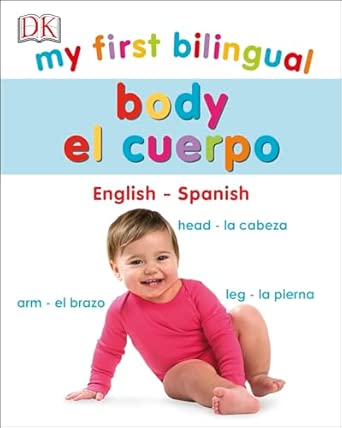 | Best for a First Bilingual Book Gift | Title: My First Bilingual Board Book | Book type: Board book | Languages: Not specified in supplied product data | VIEW ON AMAZON | See Our Full Breakdown |
| The Feelings Book / El libro de los sentimientos (Spanish and English Edition) |  | Best for Talking About Emotions | Title: The Feelings Book / El libro de los sentimientos | Languages: Spanish and English | Edition: Bilingual | VIEW ON AMAZON | See Our Full Breakdown |
| bilingual board book | Languages | Format | Title |
|---|---|---|---|
| Goodnight Moon / Buenas noches | English and Spanish | Not specified in supplied product data | Goodnight Moon / Buenas noches, Luna |
| Brown Bear | English and Spanish | Board book | — |
| Su propio color | Spanish and English | Not specified in supplied product data | Su propio color (A Color of His Own) |
| The Very Hungry Caterpillar | English and Spanish | Board book | — |
| Numbers / Números: English-Spa | English and Spanish | Touch-and-feel book | Numbers / Números |
| Big Little / Grande Pequeño | Spanish and English | Board book | — |
| My First Bilingual Library | Spanish and English | Board book set | — |
| Goodnight | English and Spanish | — | Goodnight, Good Dog / Buenas noches, perrito bueno |
| Bilingual Spanish and English | Spanish and English | Board books | — |
| How Are You? / ¿Cómo estás? | Spanish and English | Not specified in the provided product details | How Are You? / ¿Cómo estás? |
| I Need a Hug / Necesito un abr | English and Spanish | — | I Need a Hug / Necesito un abrazo |
| Five Little Monkeys Jumping on | Spanish and English | Not specified in supplied product data | Five Little Monkeys Jumping on the Bed |
| My First Bilingual Board Book | Not specified in supplied product data | — | My First Bilingual Board Book |
| The Feelings Book / El libro d | Spanish and English | — | The Feelings Book / El libro de los sentimientos |
More Details on Our Top Picks
Goodnight Moon / Buenas noches, Luna: A Bilingual Edition of the Beloved Bedtime Classic (Spanish Edition)
Side-by-side English and Spanish text makes this a natural fit for families who want to share a familiar bedtime story across languages. The classic illustrations and calm nighttime routine give children recognizable scenes to revisit, while caregivers can read in one language or move between both. Compared with Brown Bear, Brown Bear, What Do You See?, this edition leans on a quieter bedtime rhythm rather than animal names and repetition as a language-learning hook. Its main tradeoff is that the bilingual format is described, but the supplied details do not confirm a board-book construction, so I would not choose it first for a baby who mouths or roughly handles books. It also offers less tactile play than Numbers / Números.
Pros:- Presents the story in both English and Spanish side by side
- Retains the classic illustrations familiar to many families
- A bedtime setting supports a repeatable reading routine
- Can serve households that read in one language or both
Cons:- The supplied product details do not confirm a board-book format
- A calm bedtime story offers less direct concept practice than Numbers / Números
- The classic story may offer less repeated vocabulary drilling than Brown Bear, Brown Bear, What Do You See?
Best for: Families seeking a familiar, unhurried English-Spanish bedtime story to read in either language or side by side.
Not ideal for: Caregivers shopping specifically for a confirmed board book for a baby who handles books roughly, or for tactile features and active vocabulary practice.
- Title:Goodnight Moon / Buenas noches, Luna
- Edition:Bilingual edition
- Languages:English and Spanish
- Story type:Bedtime classic
- Illustrations:Original classic illustrations
- Format:Not specified in supplied product data
Our verdict“Choose this for shared English-Spanish bedtime reading, but pick a confirmed board book if durability for baby handling is your priority.”
Brown Bear, Brown Bear, What Do You See? – Bilingual Board Book (English/Spanish)
Sturdy board pages and a familiar animal sequence make this one of the clearest starting points here for toddler-led bilingual reading. Bright illustrations give children something concrete to name, and the repeated pattern makes it easier for caregivers to pause, predict, and say each animal in English or Spanish. Compared with Goodnight Moon / Buenas noches, Luna, this pick is more focused on repeated vocabulary than on winding down for sleep; unlike Numbers / Números, it centers on animals rather than early counting and tactile exploration. The simplicity is useful for babies and young toddlers, but it may not hold older children’s attention for long. It is also limited to English and Spanish, so it will not serve families seeking a third language.
Pros:- Board-book construction suits frequent handling by young children
- Repeated story pattern supports anticipation and language practice
- Bright animal illustrations give words clear visual referents
- English and Spanish text supports reading in either language
Cons:- The simple story may have limited appeal for older children
- The language offering is limited to English and Spanish
- Animal vocabulary is narrower in scope than the number concepts in Numbers / Números
Best for: Families with babies or toddlers who want a durable English-Spanish read-aloud built around familiar animal words and repetition.
Not ideal for: Families seeking content for older preschoolers, tactile activities, or support in more than English and Spanish.
- Format:Board book
- Languages:English and Spanish
- Age range:0–3 years
- Story focus:Animals
- Illustration style:Bright, colorful illustrations
- Story structure:Familiar, repetitive classic story
Our verdict“Pick this as a durable first bilingual read-aloud for a toddler who enjoys animals and repeated phrases.”
Su propio color (A Color of His Own): Spanish-English Bilingual Edition
Spanish-English presentation gives families a way to share this story in both languages, while its title points toward a color-centered theme that differs from the animal naming in Brown Bear, Brown Bear, What Do You See? That thematic focus may suit readers looking for a story-led alternative to the touch-and-feel number practice in Numbers / Números. However, the supplied information is sparse: it does not confirm a board-book format, age range, page details, or how the two languages are arranged. Those gaps matter in a roundup focused on bilingual board books, particularly for buyers choosing a book for babies who need sturdy pages. I would treat this as a promising bilingual story pick only after checking the format and edition details.
Pros:- Identified as a Spanish-English bilingual edition
- Color-centered theme offers a different subject from animal-focused Brown Bear
- Story format provides an alternative to concept-only touch-and-feel books
Cons:- The supplied data does not confirm board-book construction
- No age range or physical format details are provided
- The available information does not describe how the languages appear on the page
Best for: Bilingual households interested in a Spanish-English story with a color-centered theme, provided the format suits the child’s age.
Not ideal for: Buyers who need confirmed board-book construction, a stated age range, or detailed information about the bilingual layout before choosing.
- Title:Su propio color (A Color of His Own)
- Edition:Spanish-English bilingual edition
- Languages:Spanish and English
- Format:Not specified in supplied product data
- Age range:Not specified in supplied product data
- Story theme:Color, based on the supplied title
Our verdict“Consider it for a bilingual color-themed story, but verify the format and language layout before buying for a baby.”
The Very Hungry Caterpillar – Bilingual Board Book (English/Spanish)
English-Spanish text in a board-book format pairs a familiar story with pages sturdy enough for toddler reading routines. Its narrative gives caregivers a read-aloud option that feels more like following a character than practicing a sequence of animal names, making it a different choice from Brown Bear, Brown Bear, What Do You See? The supplied details also identify it as suitable for ages 0–3, while Goodnight Moon / Buenas noches, Luna offers a bedtime mood but has no confirmed format in the available data. This caterpillar edition is limited to two languages and the description does not specify interactive features, so it is less suited to families seeking tactile exploration like Numbers / Números.
Pros:- Board-book format is suited to toddler handling
- Offers the story in English and Spanish
- Familiar narrative can encourage repeat readings
- Listed for ages 0–3
Cons:- Only English and Spanish are listed
- No tactile or other interactive features are described
- Story-led reading is less directly focused on number practice than Numbers / Números
Best for: Families with toddlers who want a sturdy English-Spanish storybook for repeat read-alouds and shared reading.
Not ideal for: Caregivers looking for a multilingual edition, sensory activities, or a book focused primarily on counting or naming vocabulary.
- Format:Board book
- Languages:English and Spanish
- Age range:0–3 years
- Story focus:The Very Hungry Caterpillar
- Illustrations:Bright illustrations
- Reading use:Toddler read-aloud
Our verdict“Choose this for a toddler-friendly English-Spanish story read-aloud rather than a tactile or focused vocabulary book.”
Numbers / Números: English-Spanish Bilingual
Touch-and-feel elements set this English-Spanish number book apart from the story-led choices in this group. For babies who learn by reaching and touching, the tactile format can make shared reading more active than The Very Hungry Caterpillar or Goodnight Moon / Buenas noches, Luna. Its place in the Bright Baby Touch and Feel series also signals a sensory-reading approach, though the supplied details do not say which numbers appear or what the textures are. That missing information makes it harder to judge the book’s learning scope or how varied the interactions will feel. I would choose it for hands-on number exploration, not as a substitute for a developed bilingual story or a clearly specified counting lesson.
Pros:- Introduces numbers in English and Spanish
- Touch-and-feel format invites hands-on exploration
- Part of the Bright Baby Touch and Feel series
- Offers a sensory alternative to story-led bilingual books
Cons:- The supplied details do not identify the numbers included
- Specific textures and interactive elements are not described
- The product data does not confirm board-book construction
Best for: Caregivers of babies who want an English-Spanish book that pairs early number exposure with tactile exploration.
Not ideal for: Readers seeking a detailed story, a specified number sequence, or clear information about the touch-and-feel features before buying.
- Title:Numbers / Números
- Languages:English and Spanish
- Series:Bright Baby Touch and Feel
- Format:Touch-and-feel book
- Learning focus:Numbers
- Specific numbers:Not specified in supplied product data
- Tactile features:Specific textures not specified in supplied product data
Our verdict“Choose it for sensory English-Spanish number exposure, but look elsewhere if you need a detailed story or confirmed format specifications.”
Big Little / Grande Pequeño – Bilingual Spanish-English Concept Book of Opposites for Babies and Toddlers
Big Little / Grande Pequeño gives Spanish-English beginners a focused way to pair opposite concepts with simple illustrations. Its sturdy board pages suit babies and toddlers, while the concise text keeps each idea easy to follow during a short shared read. Compared with My First Bilingual Library, which spans several early-learning topics, this book trades breadth for a clear concept-based focus. That makes it a useful choice when caregivers want to talk about contrasts rather than move through a collection of vocabulary categories. The limitation is the same focus: opposites offer a narrow vocabulary set, so older toddlers may want more variety or a longer story. I’d choose it as a compact concept book, not as a stand-alone bilingual library.
Pros:- Pairs basic opposite concepts in Spanish and English.
- Board-book format is suited to handling by babies and toddlers.
- Simple illustrations help make abstract contrasts easier to discuss.
- Focused subject gives caregivers a clear prompt for back-and-forth talk.
Cons:- The limited concept range offers less vocabulary variety than a multi-topic set.
- Older toddlers may outgrow its simple material sooner than broader books.
Best for: Caregivers of babies and younger toddlers who want a sturdy, picture-led introduction to opposite concepts in Spanish and English.
Not ideal for: Families seeking broad vocabulary coverage, a longer narrative, or material that will challenge older toddlers over time.
- Format:Board book
- Languages:Spanish and English
- Age range:0–3 years
- Author/illustrator:Leslie Patricelli
- Main subject:Opposite concepts
- Intended audience:Babies and toddlers
Our verdict“Choose this for an early, visual introduction to opposites; pick My First Bilingual Library instead if you want several vocabulary themes in one set.”
My First Bilingual Library – Spanish-English Vocabulary Board Book Set
My First Bilingual Library is the broad-coverage pick in this group: its set introduces colors, numbers, animals, the alphabet, and other early vocabulary in Spanish and English. That range gives caregivers more ways to follow a toddler’s changing interests than a single-topic title such as Big Little / Grande Pequeño, which concentrates on opposites. The sturdy board-book format and bright illustrations suit short, hands-on reading sessions, while the collection format makes it easier to switch topics without changing the bilingual routine. The tradeoff is limited depth within each subject; compact books introduce words rather than build a detailed lesson or story. Compared with the 10-book Little Library, the available details here do not state a book count, so buyers seeking a specific number of titles should check the set contents before choosing.
Pros:- Covers several early-learning themes, including colors, numbers, animals, and the alphabet.
- Presents vocabulary in both Spanish and English.
- Sturdy board-book format is suited to toddler handling.
- Bright illustrations can support word-to-picture connections.
Cons:- Each topic has limited room for deeper explanation or practice.
- The product details provided do not specify how many books are included.
- A collection may be more than needed for families seeking one simple bilingual title.
Best for: Families introducing several everyday vocabulary themes to toddlers and wanting Spanish-English books in a board-book collection.
Not ideal for: Buyers who need a confirmed book count, detailed coverage of each topic, or a single focused concept book.
- Format:Board book set
- Languages:Spanish and English
- Target age:0–3 years
- Topics:Colors, numbers, animals, alphabet, and more
- Illustrations:Bright, child-friendly illustrations
- Intended use:Early bilingual vocabulary
Our verdict“Choose this set for varied first vocabulary across several topics, but compare its contents with the 10-book Little Library if set size is your priority.”
Goodnight, Good Dog / Buenas noches, perrito bueno: Bilingual English-Spanish
Goodnight, Good Dog / Buenas noches, perrito bueno is the bedtime-themed option among these titles, offering the story in English and Spanish. That gives it a different role from vocabulary-led books such as Big Little / Grande Pequeño: it may suit a familiar read-aloud routine more than a session focused on naming concepts. The product information supplied is sparse, though, and does not confirm a board-book format, age range, page design, or how the two languages are arranged. I would not assume it has the sturdy construction or baby-focused layout of the clearly identified board books in this roundup. Its appeal rests on the bilingual bedtime title, while the missing format and content details make it harder to judge durability and reading flow against options such as Goodnight Moon / Buenas noches, Luna.
Pros:- The title is presented as an English-Spanish bilingual edition.
- Bedtime subject may fit naturally into an evening read-aloud routine.
- Offers a story-oriented alternative to concept and vocabulary books.
Cons:- Provided details do not confirm that this edition is a board book.
- No age range or physical construction details are supplied.
- The bilingual page layout and extent of the Spanish text are not specified.
Best for: Caregivers looking for an English-Spanish bedtime title and willing to verify the edition’s format and layout before buying.
Not ideal for: Families specifically seeking a confirmed board book for babies, or buyers who need clear information about age range, page construction, and bilingual layout.
- Title:Goodnight, Good Dog / Buenas noches, perrito bueno
- Languages:English and Spanish
- Edition:Bilingual English-Spanish
- Format listed:Spanish Edition
- Subject:Bedtime story
- Board-book status:Not specified in the provided product details
Our verdict“Consider it for bilingual bedtime reading only after confirming its format and language layout; choose a clearly specified board book if durability is essential.”
Bilingual Spanish and English Little Library: 10 Board Books
Bilingual Spanish and English Little Library: 10 Board Books stands out for its explicitly stated set of ten titles, giving families a wider selection than a single book such as Big Little / Grande Pequeño. The listed themes include counting, colors, feelings, animals, the wheels on the bus, and ABCs, so the set mixes early vocabulary with familiar subjects and songs. That variety can help caregivers rotate reading choices while keeping both languages in the routine. Unlike My First Bilingual Library, whose supplied details do not state a book count, this set makes its quantity clear. The tradeoff is that the description does not explain how content is divided among titles or how much vocabulary each contains. I’d favor it for variety, not for depth on any one topic.
Pros:- Includes ten board books in one set.
- Combines Spanish and English across the collection.
- Covers varied subjects, including counting, feelings, animals, and ABCs.
- Includes a familiar song topic alongside early-learning themes.
Cons:- The supplied details do not describe how topics are allocated across the ten books.
- A multi-book set may provide less depth per subject than a dedicated title.
- Page count and bilingual text layout are not specified.
Best for: Families who want a clearly specified collection of multiple Spanish-English board books across familiar early-learning themes.
Not ideal for: Caregivers seeking extensive instruction in one subject, or buyers who need detailed information about each book’s page count and language layout.
- Format:Board books
- Languages:Spanish and English
- Number of books:10
- Topics:Counting, colors, feelings, animals, wheels on the bus, ABCs, and more
- Collection type:Little library set
- Intended content:Early-learning themes
Our verdict“Pick this set for a stated ten-book range of topics; choose Big Little / Grande Pequeño instead for a more focused introduction to opposites.”
How Are You? / ¿Cómo estás? (Spanish-English Bilingual)
How Are You? / ¿Cómo estás? offers a concise bilingual prompt around a familiar everyday question. That narrow subject can be useful for caregivers who want to start a Spanish-English exchange about how a child feels, rather than work through the broader topic mix in Bilingual Spanish and English Little Library: 10 Board Books. The title signals a practical conversational theme, but the supplied information confirms only the languages; it does not establish the format, age range, illustrations, or whether feelings vocabulary is developed beyond the central question. I would treat this as a potentially focused conversation starter, not assume it is a durable board book or a full emotional-learning guide. Compared with The Feelings Book / El libro de los sentimientos, its description gives much less detail about the scope of feelings content.
Pros:- Includes Spanish and English.
- The question-led title may encourage simple conversational practice.
- Its focused theme offers a contrast to broad multi-topic vocabulary sets.
Cons:- The supplied product details do not confirm a board-book format.
- No age range, illustrations, or construction details are provided.
- The extent of feelings vocabulary and bilingual page layout is unclear.
Best for: Bilingual caregivers looking for a short, everyday prompt to invite Spanish-English conversation about how someone feels, after checking the edition details.
Not ideal for: Parents who need confirmed board-book construction, a stated toddler age range, or evidence of broad feelings vocabulary.
- Title:How Are You? / ¿Cómo estás?
- Languages:Spanish and English
- Format:Not specified in the provided product details
- Age range:Not specified in the provided product details
- Subject indicated by title:Everyday feelings question
- Language layout:Not specified in the provided product details
Our verdict“Consider this for a focused bilingual feelings prompt if its format and contents meet your needs; choose the 10-book Little Library for confirmed board-book variety.”
I Need a Hug / Necesito un abrazo (Scholastic Bilingual) (Spanish Edition)
I Need a Hug / Necesito un abrazo is the most focused choice here for families who want a bilingual story with an affectionate emotional theme. Its English-and-Spanish format gives adults a natural chance to read the same story in either language, rather than relying on a list of vocabulary words. Compared with The Feelings Book / El libro de los sentimientos, this title appears centered on one familiar idea—wanting comfort—rather than a broad range of emotions, which may make it easier to discuss in a short read-aloud. The tradeoff is limited product information: the supplied details do not confirm board-book construction, page count, or illustration style. I would choose it for a simple shared story, but not as a clearly documented first vocabulary book or a durable board-book purchase without checking the format.
Pros:- English-and-Spanish edition supports reading in either language.
- A focused, comforting theme gives adults an easy starting point for conversation.
- Story format offers a different experience from concept or vocabulary titles such as Numbers / Números.
Cons:- The available product details do not confirm that this edition is a board book.
- No page count, illustration details, or language-layout information is provided.
- Its single emotional theme may offer less range than The Feelings Book / El libro de los sentimientos.
Best for: Caregivers seeking a short bilingual story about comfort to read together in English or Spanish.
Not ideal for: Shoppers who specifically need confirmed board-book durability or detailed vocabulary and format information.
- Title:I Need a Hug / Necesito un abrazo
- Series:Scholastic Bilingual
- Edition:Spanish Edition
- Languages:English and Spanish
- Work:Bilingual edition of I Need a Hug
- ASIN:1338565958
Our verdict“Choose this for a focused bilingual comfort story, but verify the physical format if board-book construction is a requirement.”
Five Little Monkeys Jumping on the Bed (Spanish and English Edition)
Five Little Monkeys Jumping on the Bed suits families who want a bilingual reading session built around a recognizable, repeating rhyme. The Spanish-and-English edition offers a way to revisit a familiar story across both languages, while its repeated setup can give children chances to anticipate what comes next. That makes it a livelier choice than the theme-focused I Need a Hug / Necesito un abrazo, which is centered on comfort rather than a cumulative refrain. The tradeoff is that the supplied details identify the language pairing and story, but do not confirm board-book construction, page count, or how the two languages are arranged on the page. I would pick this for playful shared reading, not for buyers who need verified toddler-proof materials or a structured vocabulary progression.
Pros:- Spanish-and-English edition makes the story available in both languages.
- A repeated story pattern can invite children to join in and anticipate lines.
- Playful read-aloud format contrasts with the calmer, focused theme of I Need a Hug / Necesito un abrazo.
Cons:- The supplied data does not verify that this edition is a board book.
- No page count or bilingual text layout is specified.
- A story-led rhyme may provide less direct vocabulary organization than a concept book such as Numbers / Números.
Best for: Families who enjoy rhythmic read-alouds and want to share a familiar, repetitive story in Spanish and English.
Not ideal for: Buyers seeking confirmed board-book construction, a broad vocabulary curriculum, or detailed format specifications.
- Title:Five Little Monkeys Jumping on the Bed
- Edition:Spanish and English Edition
- Languages:Spanish and English
- Format:Not specified in supplied product data
- Page count:Not specified in supplied product data
- ASIN:0544089006
Our verdict“Pick this for energetic bilingual story time and repeated lines, but confirm the format before buying it as a board book.”
My First Bilingual Board Book
My First Bilingual Board Book is the most direct match by title for shoppers seeking an introductory bilingual board book. Compared with My First Bilingual Library – Spanish-English Vocabulary Board Book Set, its singular-book framing may appeal to someone who wants one entry point rather than a collection. But the supplied product data offers no description, language pair, vocabulary themes, or age guidance, so I cannot tell whether it teaches everyday words, concepts, or something else. Even the title does not identify which two languages are included. That lack of detail makes it harder to rank as a learning pick, despite the explicit board-book designation. I would treat it as a potential first-book option only after checking the listing or edition details for the language pairing and contents.
Pros:- The title explicitly identifies it as a board book.
- The introductory framing may suit a family looking for one first bilingual title.
- A single-book format is a simpler starting point than a multi-book set.
Cons:- The supplied data does not identify the languages included.
- No subject matter, vocabulary themes, or age guidance are provided.
- Limited product details make comparison with specified Spanish-English titles such as The Feelings Book / El libro de los sentimientos difficult.
Best for: Gift buyers who want a single introductory bilingual board book and can verify the language pair and contents before purchase.
Not ideal for: Caregivers who need confirmed Spanish-English content, a specific vocabulary theme, or detailed age and format information.
- Title:My First Bilingual Board Book
- Book type:Board book
- Languages:Not specified in supplied product data
- Subject:Not specified in supplied product data
- Age guidance:Not specified in supplied product data
- Page count:Not specified in supplied product data
- ASIN:1465496874
Our verdict“Consider it as a first bilingual board book only if the retailer listing confirms the languages and learning content you need.”
The Feelings Book / El libro de los sentimientos (Spanish and English Edition)
The Feelings Book / El libro de los sentimientos earns a distinct place for caregivers who want bilingual reading to prompt conversations about emotions. Simple text and bright illustrations are described as ways to help young children recognize and talk about feelings in both Spanish and English. Unlike I Need a Hug / Necesito un abrazo, which centers on one comforting idea, this title introduces a wider range of emotions, making it a better fit for naming different moods. The tradeoff is that its simple treatment may feel too brief for older children looking for explanations or more nuanced discussion. The supplied information calls it a picture book, not specifically a board book, so I would verify the physical format before choosing it for children who need sturdy board pages.
Pros:- Presents emotions in both Spanish and English.
- Simple text is suited to brief shared reading and discussion.
- Bright illustrations can help young readers connect words with feelings.
- Covers a wider range of emotions than the single-theme I Need a Hug / Necesito un abrazo.
Cons:- Limited depth may not satisfy older children seeking fuller explanations.
- The supplied description identifies a picture book, not a board-book format.
- No page count or detailed language-layout information is provided.
Best for: Parents and educators who want a Spanish-English story to help young children name and discuss a range of feelings.
Not ideal for: Older children seeking detailed explanations of emotions, or shoppers who require confirmed board-book construction.
- Title:The Feelings Book / El libro de los sentimientos
- Languages:Spanish and English
- Edition:Bilingual
- Book type:Picture book
- Text style:Simple text
- Illustrations:Bright illustrations
- Subject:Emotions and feelings
- ASIN:0316541834
Our verdict“Choose this for bilingual emotion-naming conversations with young children, but check the format and expect a simple treatment.”

How We Picked
I compared these 14 titles by how well they serve the specific purpose of bilingual board books: helping an adult and young child share a book across English and Spanish. I gave weight to the usefulness of the text for read-alouds, the clarity of the book’s focus, and whether its story or concepts give families a reason to return to it. I also considered format and range: a single story, a focused vocabulary book, and a multi-book library solve different needs, so I judged each against its likely use rather than treating more content as automatically better.
The ranking favors books that combine an accessible reading experience with a clear reason to choose them over other titles in this group. Familiar, rhythmic stories rank ahead for repeat reading; focused concept books rank well for a specific learning goal; sets earn attention for variety but may be less convenient when a family wants one go-to book. Since age, language background, and reading habits differ, the role labels and drawbacks are part of the ranking—not just the order.
| bilingual board book | Languages | Format |
|---|---|---|
| Goodnight Moon / Buenas noches | English and Spanish | Not specified in supplied product data |
| Brown Bear | English and Spanish | Board book |
| Su propio color | Spanish and English | Not specified in supplied product data |
| The Very Hungry Caterpillar | English and Spanish | Board book |
| Numbers / Números: English-Spa | English and Spanish | Touch-and-feel book |
| Big Little / Grande Pequeño | Spanish and English | Board book |
| My First Bilingual Library | Spanish and English | Board book set |
| Goodnight | English and Spanish | — |
| Bilingual Spanish and English | Spanish and English | Board books |
| How Are You? / ¿Cómo estás? | Spanish and English | Not specified in the provided product details |
| I Need a Hug / Necesito un abr | English and Spanish | — |
| Five Little Monkeys Jumping on | Spanish and English | Not specified in supplied product data |
| My First Bilingual Board Book | Not specified in supplied product data | — |
| The Feelings Book / El libro d | Spanish and English | — |
Factors to Consider When Choosing Bilingual Board Books
Before choosing, decide what you want the book to do in your daily routine. A bilingual title can support shared storytelling, introduce a small set of words, or give a child a broad selection through a library set. These distinctions affect how often a book gets read and how useful it feels to adults who may be more comfortable in one language than the other.
Choose Story Repetition or Focused Vocabulary
Repetition and rhyme can make a story easier for a young child to anticipate and participate in, even before they understand every word. A vocabulary-focused book gives adults a clearer teaching target, such as numbers, colors, or opposites, but may feel less like a story to revisit. A common mistake is buying a concept book expecting it to hold attention like a favorite narrative. Think about whether your child prefers naming objects or hearing the same plot and phrases again. If you want both kinds of reading, one story and one focused book can complement each other better than several books with similar word lists.
Check How the Languages Are Presented
English-Spanish books can place both languages together on each page or arrange them in another reading pattern, and that changes how an adult reads aloud. Look at a sample spread when available: type size, spacing, and the order of the languages can affect whether you can follow along comfortably. Do not assume that a bilingual label means every page gives equal space or clarity to both languages. Families may also prefer different reading approaches—one language at a time, alternating languages, or comparing words as they go. Choose a layout that supports the way your household actually reads, rather than one that only looks useful on a product listing.
Match the Book to Your Child’s Current Interest
A child who enjoys animals may return to an animal story more readily than a general first-words book, while a child who likes counting may be drawn to numbers or patterns. Interest helps a book become part of a routine, which gives adults more chances to use both languages naturally. Avoid choosing solely by an age label or by the idea that a particular topic is more educational. Consider what your child points at, repeats, or asks to hear again. If their interests are still changing quickly, a set can provide more subjects, though a single appealing title may be easier to keep in rotation.
Decide Whether a Set Earns Its Space
Multi-book collections provide more variety in one purchase, which can be useful for families building a small home library or looking for different topics to share. The tradeoff is that sets take more room and may include books that get less use than a favorite standalone title. Compare the number of distinct topics with how often you expect to read each one, not just the total book count. A smaller collection can be a better fit when shelf space is limited or you want to learn which themes your child enjoys first. Sets make more sense when variety itself is the goal and adults have time to rotate books.
Consider Who Will Read the Book
A bilingual book is shared by the child and the adult, so the reader’s comfort matters too. If one caregiver is learning Spanish, a simple, repeated story may feel more approachable than a book with many unfamiliar words. If fluent speakers will read it, a broader vocabulary or more varied story may offer a different kind of engagement. Do not treat a book as a test of a child’s language ability; shared reading can be enjoyable even when the adult pauses to discuss a word. Choose a book that lets the people reading together participate without pressure.
Think About the Routine Before Paying for More
A book earns its place through use, not through the number of concepts it covers. Before choosing a larger set or several specialized titles, consider where reading will happen: at bedtime, during a short play break, or as part of a regular story time. A familiar bedtime story may be more useful to your family than a wider selection that rarely gets opened. Paying for more variety makes sense when you expect to rotate books or share them among children with different interests. For a first purchase, one appealing title can reveal what your child enjoys before you add more books.
Frequently Asked Questions
Should I choose a bilingual storybook or a vocabulary book first?
Start with the format your child is most likely to enjoy sharing. A storybook can be a strong first choice if your child likes characters, repeated phrases, or bedtime reading; a vocabulary book may suit a child who enjoys naming pictures and pointing. You do not need to teach every word for the book to be useful. Reading for pleasure can give both languages a place in an everyday routine. If you are unsure, choose one book with a subject your child already likes rather than buying several formats at once.
Is a bilingual board book useful if I speak only one of the two languages?
Yes. You can read the language you know comfortably and use the book as an invitation to explore the other language together. Clear paired text can help an adult compare words, while repeated phrases may be easier to follow than a text-heavy story. If pronunciation is a concern, check whether the publisher provides audio or pronunciation support; the book itself may not include it. A bilingual book can support shared reading without requiring a caregiver to be fluent in both languages.
Would a multi-book bilingual library be a better first purchase than one book?
A library set makes sense if you want several topics ready to rotate and have room to store them. One standalone book is often a better first step if you do not yet know whether your child prefers stories, concepts, or first-word vocabulary. Sets can offer variety, but the extra selection has less value if only one or two books become regular reads. Think about your household’s reading habits as well as the number of titles. You can start with one favorite and add a set later if your child enjoys exploring different subjects.
How can I tell whether the English and Spanish are balanced enough for my family?
Check sample pages for how visible each language is, how the text is arranged, and whether both versions are easy to read aloud. Balance does not always mean identical wording or equal space on every spread; what matters is whether the book supports the way your family wants to use it. Some caregivers prefer both languages side by side, while others want to read one version through at a time. If one language is the main learning goal, make sure it is not difficult to find or follow on the page. A preview can answer these questions better than the cover alone.
Should I buy a book focused on feelings or a familiar bedtime story?
Choose based on the conversations and routines you want to encourage. A feelings book can give adults and children a prompt for naming emotions, while a bedtime story may fit naturally into a quiet, repeatable evening habit. Neither replaces the other, and families do not need to treat every read as a lesson. If bedtime reading is already part of your routine, a familiar story may get more frequent use; if you want language for discussing emotions, the feelings title may be more relevant. The better choice is the one you can see yourself sharing often.
Conclusion
For a single book with strong read-aloud appeal, I recommend Brown Bear, Brown Bear, What Do You See? as the best overall. Families seeking the best value in variety should compare My First Bilingual Library with the 10-book Bilingual Spanish and English Little Library, choosing based on preferred scope and available shelf space. For a best premium-style bedtime choice, pick Goodnight Moon / Buenas noches, Luna for its familiar nighttime story; readers who want an easy entry point can begin with the repeated structure of Brown Bear. For specific needs, choose Numbers / Números for counting, Big Little / Grande Pequeño for opposites, or The Feelings Book / El libro de los sentimientos for naming emotions. My final advice: buy for the reading moment you already have, then expand the bilingual shelf as your child’s interests become clearer.